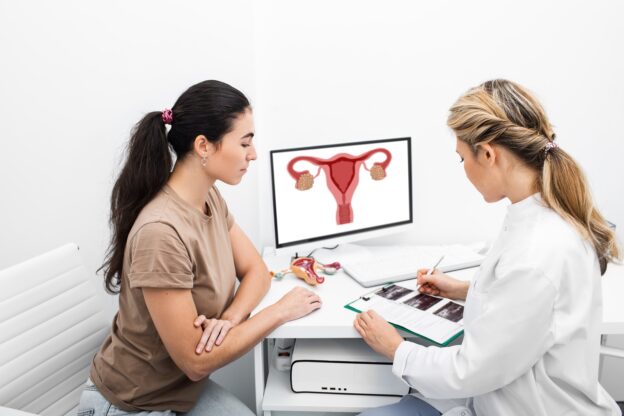
For decades, the standard protocol for endometriosis, where endometrial tissue grows outside of the uterus, was straightforward: if you found it, you removed it. Surgery was the default first step before any woman with this condition attempted to become pregnant. However, the landscape of fertility medicine has shifted dramatically.
Today, the endometriosis surgery vs. IVF debate is no longer about choosing one over the other but rather about deciding on the sequence that maximizes efficiency and safety.
At ONE Fertility Kitchener Waterloo, we understand that for patients navigating the endometriosis diagnosis who want to conceive, the goal isn’t just a positive pregnancy test—it is a healthy baby, manageable pain levels, and the preservation of long-term ovarian health. With those goals in mind, this guide is designed to help you understand the strategic decision-making process clinicians use in 2026 to determine whether you should head to the operating room or the IVF lab first.
The Case for Immediate IVF: The Efficiency Path
For many female patients, specifically those for whom fertility is the primary concern, bypassing surgery in favour of immediate in vitro fertilization (IVF) has become the preferred route. This approach prioritizes the speed of conception and the protection of ovarian reserves.
Bypassing the Hostile Environment
Endometriosis creates a hostile pelvic environment characterized by inflammatory cytokines and anatomical distortions, such as scar tissue and adhesions. These factors can physically prevent natural fertilization by blocking the egg’s path to the fallopian tube.
IVF effectively bypasses these barriers by retrieving the egg directly from the ovary and fertilizing it in the controlled environment of the laboratory, removing the inflammatory variables of the pelvic cavity from the fertilization equation.
Preserving Ovarian Reserve
One of the most critical factors in the endometriosis surgery vs. IVF decision is the impact of surgery on ovarian reserve.
Current data indicate that the surgical removal of endometriomas (cysts on the ovaries) can inadvertently remove healthy ovarian tissue. This can cause anti-Müllerian hormone (AMH) levels—a key marker of egg count—to drop by 25% to 40%.
For female patients over 35, time is the most valuable resource. Surgery typically requires a recovery period that delays conception efforts by six to nine months. For women with diminishing ovarian reserves, skipping or delaying endometriosis surgery to capture eggs immediately often yields higher success rates.
The Latest Protocols
Modern IVF protocols have evolved to manage endometriosis without surgery. We frequently utilize GnRH-agonist suppression (e.g. using Lupron) for two to three months prior to a frozen embryo transfer (FET). This medication temporarily quiets the ovaries and reduces systemic inflammation, mimicking the benefits of surgery without the surgical risks, creating a more receptive environment for the embryo.
The Case for Laparoscopic Surgery
While the “IVF-direct” approach is powerful, laparoscopic surgery remains a vital tool for specific clinical presentations of endometriosis. There are scenarios where correcting the anatomy is a prerequisite for success.
Restoring Anatomy
In cases of deep infiltrating endometriosis (DIE) or large cysts, the anatomy may be so distorted that the ovaries are inaccessible for egg retrieval. Surgery is required here to safely access the follicles and prevent organ dysfunction.
The Toxic Fluid Factor
One common question that patients ask is: does endometriosis affect IVF implantation?
The answer is yes, particularly if the condition has caused a hydrosalpinx. This occurs when the fallopian tubes become blocked and fill with toxic fluid caused by endometrial inflammation. This fluid can leak back into the uterus and cut IVF success rates by up to 50%.
In these instances, surgical removal of the affected tubes is mandatory to ensure the embryo has a safe place to implant.
Quality of Life
Fertility treatments can be physically demanding. If a woman is suffering from debilitating daily pain that affects their quality of life, they may not be able to tolerate the hormones or procedures required for IVF. In these cases, surgery is prioritized to improve the patient’s well-being before family building begins.
The Natural Window
For younger patients (under 30) with high egg counts and no male-factor infertility as part of the equation, expert excision surgery can sometimes restore pelvic anatomy enough to create a “natural window” of 12 months where unassisted conception becomes possible.
Decision Matrix: When to Choose IVF vs. Surgery
How do you know which path is yours? The clinicians at ONE Fertility use a multidimensional treatment algorithm to help you decide. This decision matrix simplifies the complex factors we evaluate during your consultation.
| Factor | Choose IVF First if… | Choose Surgery First if… |
| Primary Goal | Parenthood is the immediate, urgent priority. | Pain relief is as important as fertility. |
| Age | You are 35+ or have a low ovarian reserve (low AMH). | You are under 30 with a high egg count. |
| Pain Levels | Pain is manageable with lifestyle changes or medication. | Pain is severe, debilitating, or affecting bowel/bladder function. |
| Disease Stage | Ovarian access for egg retrieval is clear via ultrasound. | Large endometriomas (>4cm) are physically blocking access to follicles. |
| Tubal Status | Tubes are blocked or damaged (IVF bypasses these). | You wish to pursue natural conception and tubes can be repaired. |
The Middle Ground: Sequential Treatment
In 2026, ONE Fertility often recommends a hybrid approach for patients with stage III or IV endometriosis. This “best of both worlds” strategy allows us to maximize IVF success after endometriosis surgery by sequencing treatments logically:
- Egg/Embryo Freezing: We begin with IVF stimulation and egg retrieval to secure your fertility potential while your ovarian reserve is at its highest, before any surgical intervention takes place.
- Specialized Surgery: Once embryos are banked, you undergo a meticulous, fertility-sparing laparoscopy to remove inflammatory tissue, drain cysts, and address pain sources.
- Frozen Embryo Transfer (FET): Finally, three to six months after surgery, we return the embryo to a uterus that is healed, quieted, and free of inflammation.
The Next Step After Your Endometriosis Diagnosis
There is no single “right” answer for every patient. The best path is the one that aligns with your specific AMH levels, your pain threshold, and your family-building timeline.
If you are navigating an endometriosis diagnosis and want to understand your options, the team at ONE Fertility Kitchener Waterloo is here to guide you. We combine advanced reproductive technology with compassionate care to help you make the strategic choice that brings you closer to your dream of parenthood.
Contact us today to book a consultation and build your personalized treatment plan.